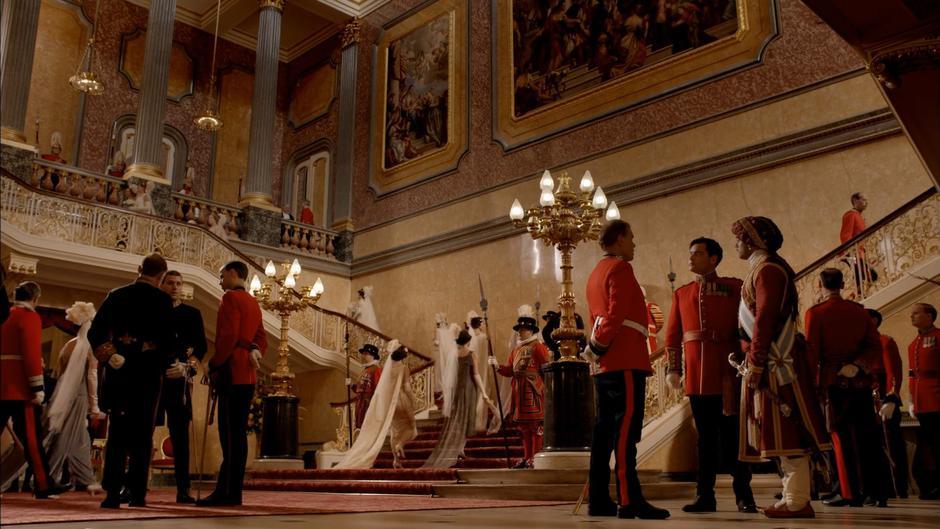
Few series have showcased Britain’s architectural heritage as elegantly as Downton Abbey. Created by Julian Fellowes and produced by Carnival Films, the series follows the Crawley family and their household staff through the seismic social changes of the early 20th century, from the sinking of the Titanic in 1912 through WW1 and the Jazz Age of the 1920s.
Although the story is set in the fictional county of Yorkshire, Downton Abbey was filmed almost entirely across real British estates, villages, and landmarks. This commitment to authenticity grounded the 3 films and 6 seasons in a tangible world and elevated its visual storytelling. For location scouts, it remains a touchstone example of how heritage locations can be adapted for large-scale period production.
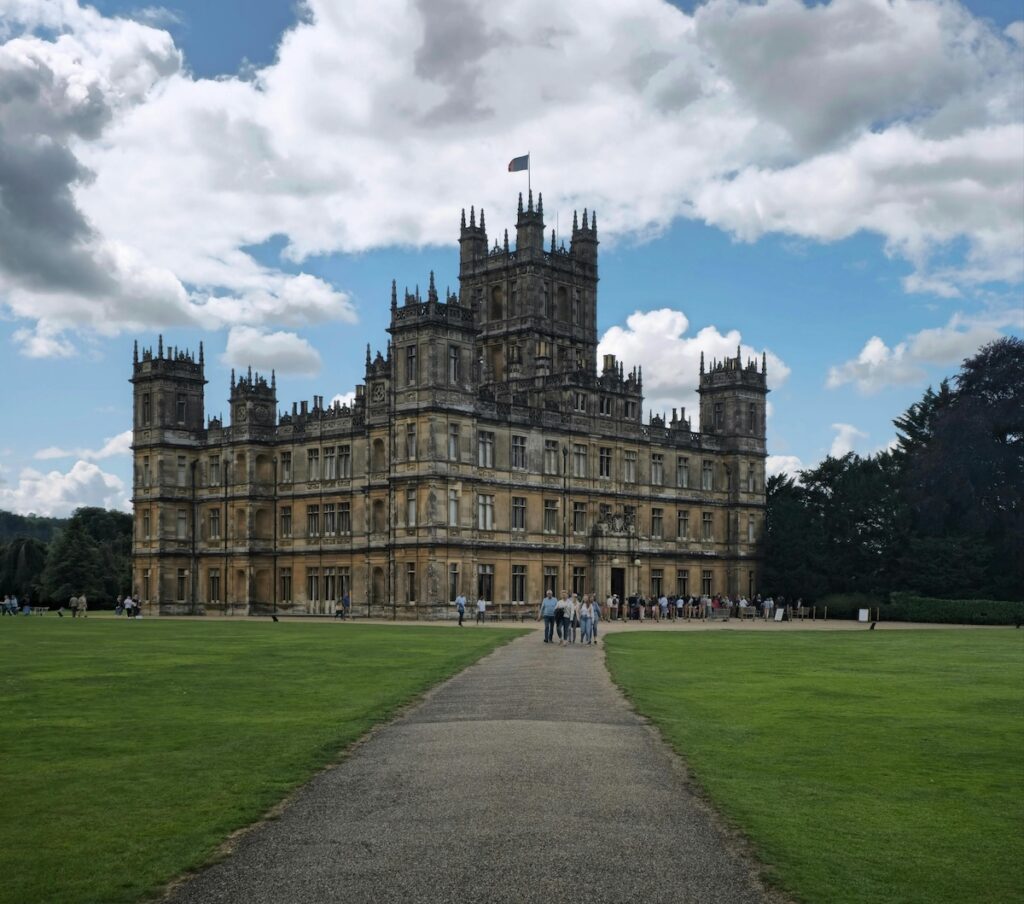
At the heart of Downton Abbey lies Highclere Castle, one of England’s most recognisable stately homes. Situated near Newbury in Hampshire, Highclere served as the Crawley family estate throughout the television series and both feature films. The castle’s symmetrical Victorian architecture, designed by Sir Charles Barry (who also designed the Houses of Parliament), and its 5,000 acres of parkland provided the perfect visual shorthand for aristocratic grandeur.
Highclere is one of the few Downton Abbey filming locations that supplied both interior and exterior spaces. Its library, drawing room, grand staircase, and dining hall were used exactly as seen on screen, with minimal set dressing required. The servants’ quarters, however, were recreated at Ealing Studios — a reminder that even heritage-based productions rely on controlled stage builds for practicality.
From a scouting perspective, Highclere offers multiple advantages: it is film-experienced, accessible from London in under two hours, and large enough to accommodate unit bases without disturbing the property’s integrity. Its golden Bath stone glows in natural light, giving cinematographers extraordinary tonal control across seasons and weather conditions.
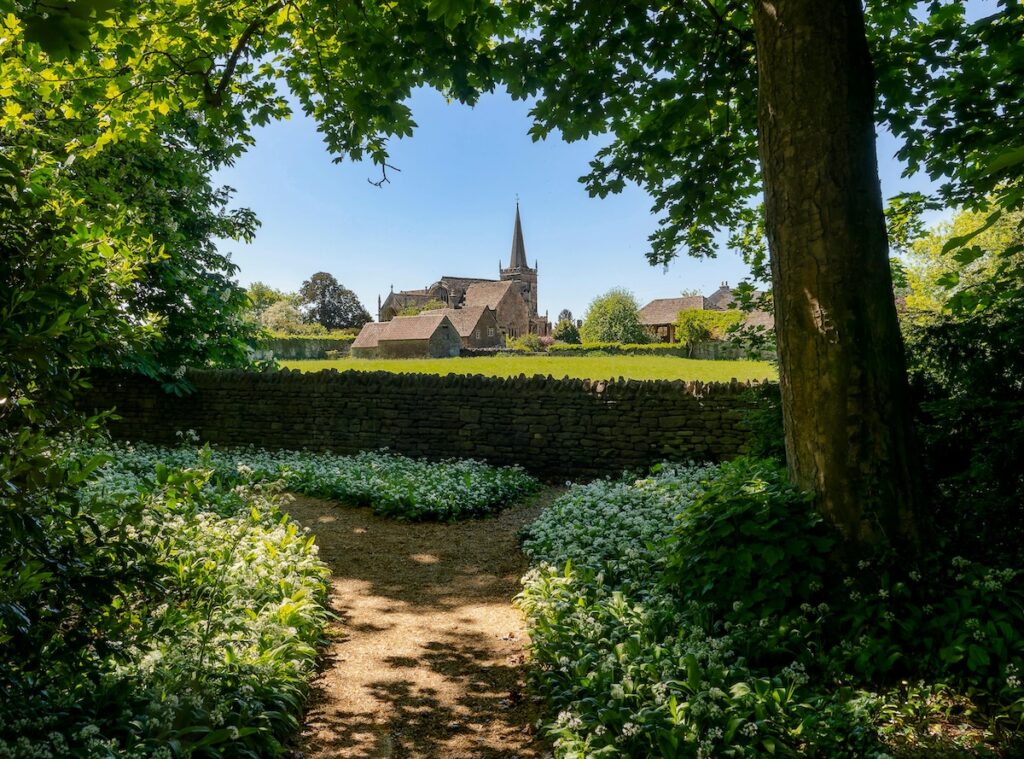
The life of Downton Abbey extended well beyond the great house, and two quintessential English villages — Bampton and Lacock — gave shape to the community that surrounded it.
Bampton, located in the Oxfordshire Cotswolds, became the show’s fictional “Downton village.” Its honey-coloured stone cottages, medieval church, and narrow lanes offered a ready-made Edwardian backdrop with minimal visual interference from the modern world. Key sites include St Mary’s Church (which doubled as St Michael and All Angels), Bampton Library (used as the Cottage Hospital), and Churchgate House, Isobel Crawley’s residence. The compact layout of the village allowed for controlled street closures and long-lens period crowd scenes.
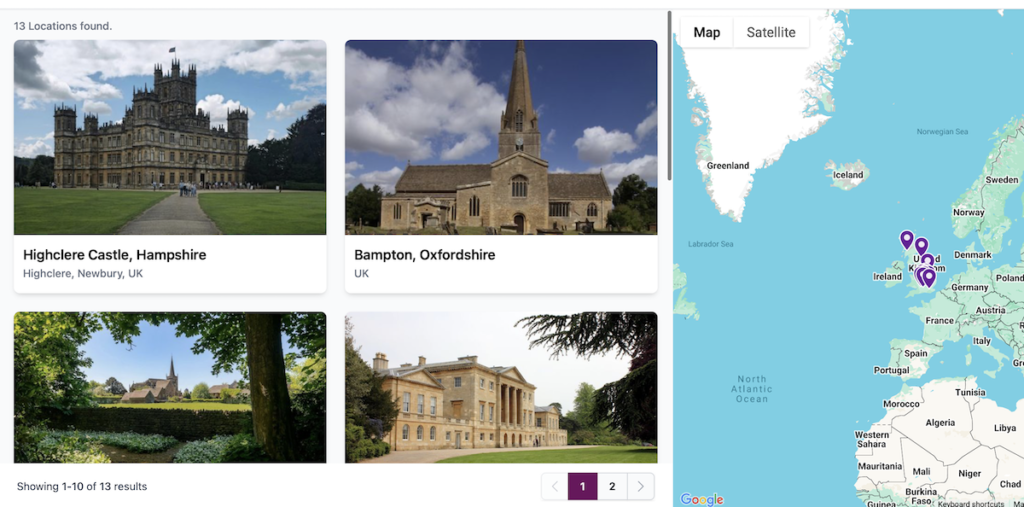
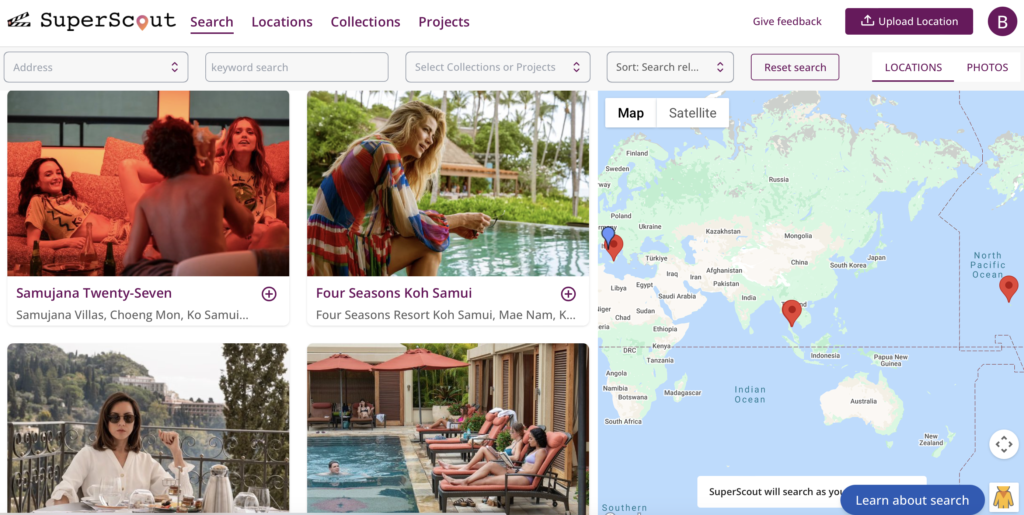
SuperScout Showcase lets you share your amazing locations across the internet, with a personally branded website that lets you build and show off your collections!
Lacock, the National Trust–owned village in Wiltshire, became one of the franchise’s most versatile outdoor locations thanks to its untouched historic character and the ease with which it can be adapted for early-20th-century storytelling. Its medieval street grid, stone façades, and limited modern intrusions gave the production team an authentic canvas for large, complex sequences.
In series six, the production used Church Street for a busy 1920s livestock market, staging scenes that involved pigs, sheep, cattle and even a massive long-horned bull. The street’s natural width and sightlines allowed the crew to choreograph animal wranglers, market stalls, background action, and camera positions while maintaining a believable small-village feel. It’s a good example of how Lacock can handle both controlled animal work and dense extras movement without feeling cramped or overly dressed.
The village played an even bigger role in the 2019 Downton Abbey feature film, set during the royal visit of King George V and Queen Mary. For this storyline, the team mounted an expansive royal procession through the centre of Lacock, filling the streets with around 350 background performers, including local volunteers costumed for the 1920s, plus 80 mounted soldiers and a period royal carriage. Despite the scale of the event, the art department only needed to make subtle tweaks: residents displayed Union Jack bunting from windows, and the road surface was lightly treated to mute its modern appearance. The architecture did the rest of the work, giving the procession a sense of grandeur without heavy intervention.
For scouts, Lacock demonstrates how a heritage village can support large-format period scenes (livestock markets, parades, military movement) while still keeping the load on art, logistics, and location prep surprisingly manageable.
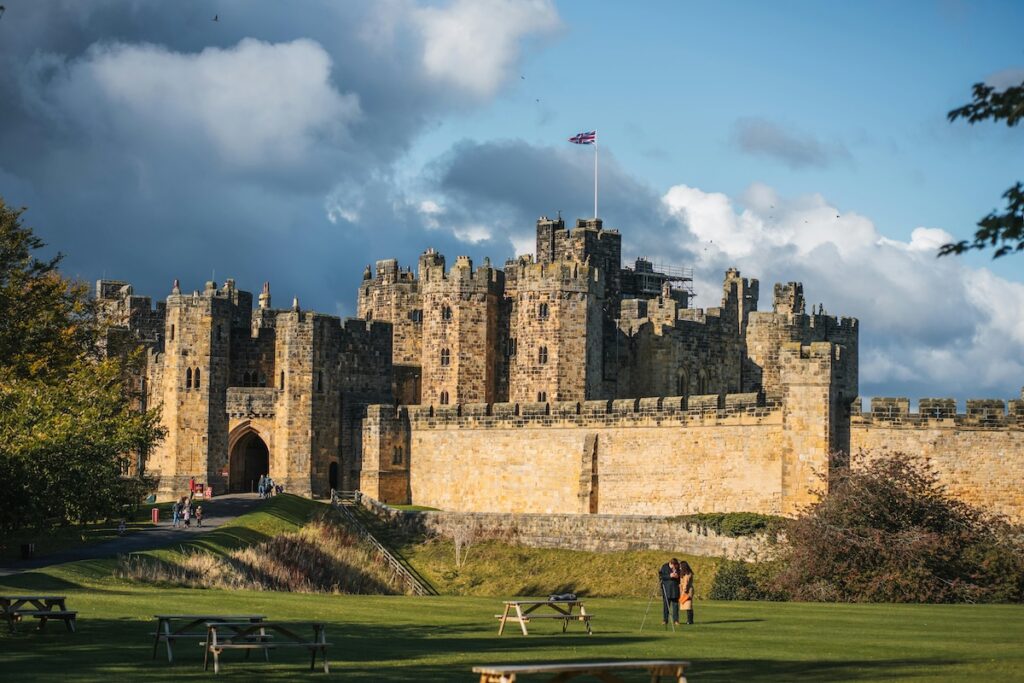
Beyond Highclere, production made strategic use of several other stately homes and castles as Downton Abbey filming locations to expand its visual geography. Each brought its own architectural style and production advantages.
Basildon Park in Berkshire doubled as the Crawleys’ London residence, “Grantham House.” This Palladian mansion, managed by the National Trust, features luminous drawing rooms and sweeping staircases that read elegantly on camera. Its proximity to Reading and well-established film liaison team make it one of southern England’s most accessible heritage sites for production.
Further north, Alnwick Castle in Northumberland became “Brancaster Castle” in the Christmas specials, showcasing lavish state apartments and a grand baronial exterior. The castle’s production-friendly infrastructure — developed from hosting Harry Potter and Elizabeth — accommodates large units, drones, and cranes with relative ease.
Scotland’s Inveraray Castle appeared in the 2012 Christmas special, representing the Marquess of Flintshire’s estate. Its distinctive Scottish baronial design and loch-side position offer visual contrast to the English estates, making it valuable for productions seeking variety in tone and geography.
West Wycombe Park, a neoclassical estate in Buckinghamshire, stood in for Lady Rosamund’s London home, offering refined interiors and a series of picturesque follies and temples for exteriors.
Lincoln Castle in Lincolnshire provided a rare institutional setting — its preserved Victorian prison wings served as York Prison during Mr Bates’s storyline in season 3.
In the 2025 film Downton Abbey: The Grand Finale, production expanded again to Claydon House in Buckinghamshire, chosen for its ornate Georgian interiors and elegant staircases. This demonstrates the franchise’s continued capacity to uncover new, under-used heritage sites and integrate them seamlessly into its established visual world.
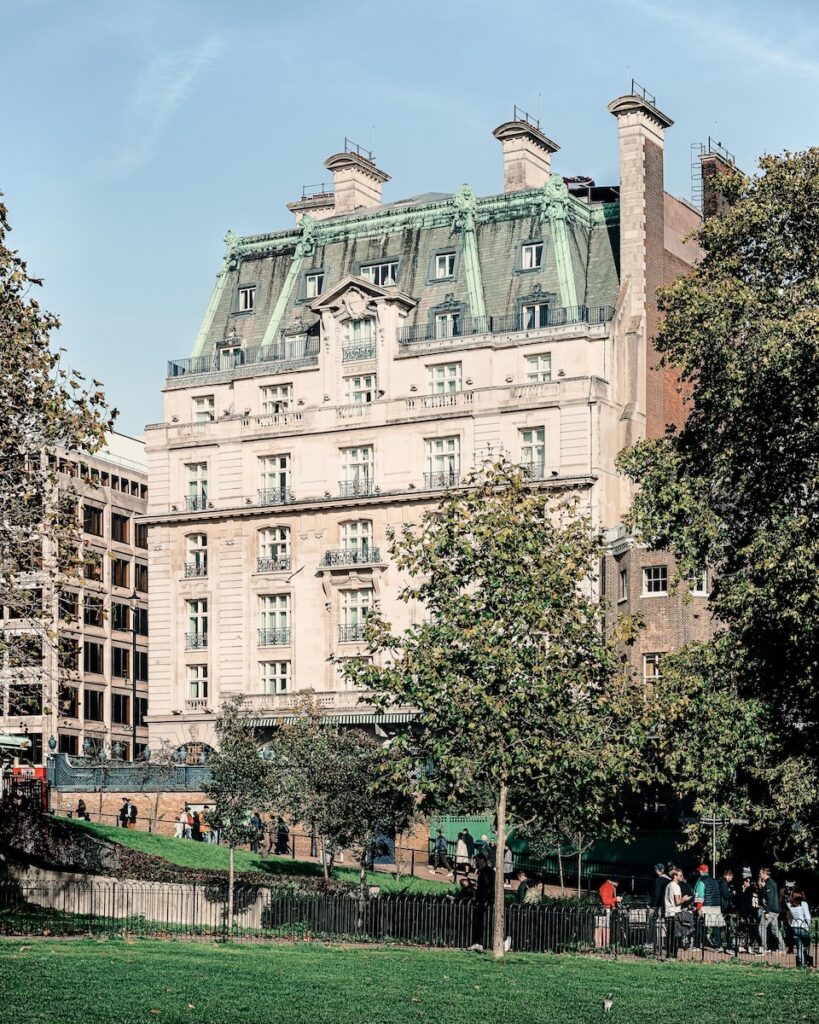
Though rooted in the countryside, Downton Abbey regularly ventured into London — the social and political hub of its era. To achieve authenticity, the production combined heritage railway stations, private townhouses, and managed city landmarks.
The Horsted Keynes Station on the Bluebell Railway in West Sussex became “Downton Station,” appearing throughout the series for key arrivals and departures. The heritage line’s period-accurate platforms, original signage, and restored rolling stock make it an invaluable resource for any production set between 1880 and 1930. The railway offers controlled access, technical support, and onsite unit bases.
The London filming locations took place across several privately owned and government-managed sites, including Lancaster House (for grand interiors and receptions - also used in Bridgerton), Bridgewater House (the exterior of Grantham’s London residence), The Ritz and Claridge’s (for dining and ballroom scenes), and select areas around Kensington Gardens and The National Gallery for establishing shots. Many London locations are accessible through the Film London partnership network, with established permitting processes and on-site management familiar with heritage productions.
Downton Abbey is more than a popular TV series — it highlights Britain’s remarkable historic locations. The show brought together real period sites to create a believable world that feels consistent across places and time.
From the grandeur of Highclere Castle to the quiet streets of Bampton, and from Alnwick’s dramatic stonework to the elegance of Basildon Park, these locations show how diverse and film-friendly the UK can be. It's amazing that so many historical locations across the UK welcome productions and offer strong support for crews.
For location scouts, the legacy of the Downton Abbey filming locations is a reminder that Britain’s estates, villages, and heritage railways are dynamic locations for storytelling. The opportunity lies in looking at these places with fresh eyes and imagining the next story they can help bring to life.
For more historical UK settings check out our guides to The Crown and Pride Prejudice filming locations.
SuperScout is your own private location library – upload locations in minutes, tag them with ai in seconds, then search and share with your team